
Equipment Guides
Skid Loader Attachment Guide: Choosing the Right Attachment
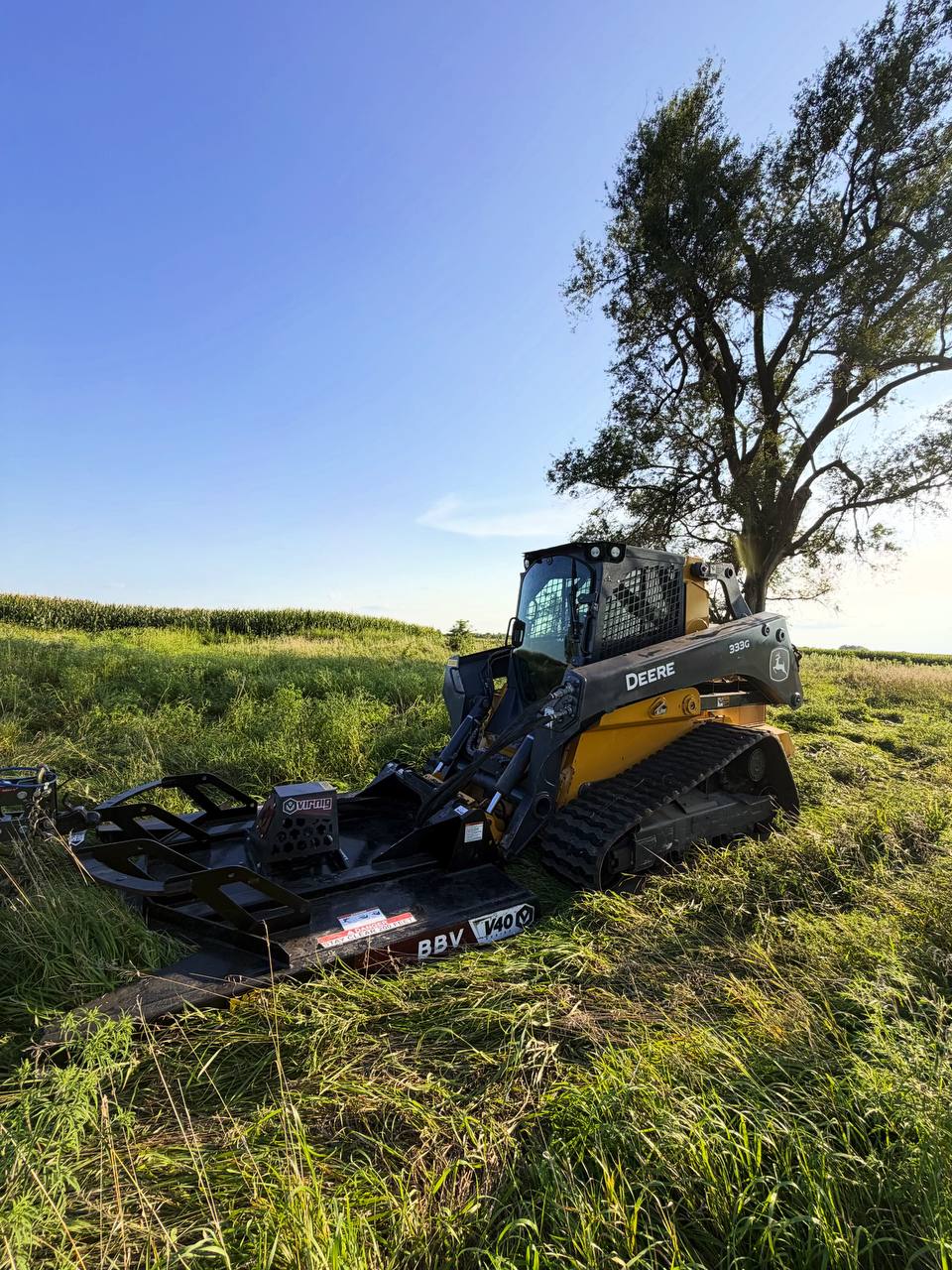
A skid loader becomes far more versatile when it is paired with the right attachment. The best choice depends on the material, finished result, hydraulic requirements, ground conditions, and the size and operating capacity of the machine.
Bucket: loading, carrying, and rough grading
A general-purpose bucket is the starting point for soil, gravel, mulch, snow, and loose debris. Bucket width and capacity should match the skid loader and material density. Heavy material can exceed the machine’s safe operating capacity before the bucket looks full.
Grapple: brush, logs, and irregular debris
A grapple adds hydraulic clamping for branches, logs, demolition debris, rocks, and bulky material that will not stay in a standard bucket. Check auxiliary hydraulic connections and protect the machine from unstable or shifting loads.
Auger: post holes and footings
Augers drill consistent holes for fencing, signs, landscaping, and footings. Choose the bit diameter and length for the project and expected soil. Rocky or compacted ground may require different tooling or a different plan. Utilities must be located before any digging begins.
Trencher: narrow utility and drainage runs
A trencher can create a narrower, more uniform trench than a bucket for certain utility, irrigation, and drainage projects. Required depth, trench width, soil conditions, spoil placement, and underground hazards determine whether it is appropriate.
Breaker: concrete and hard-material demolition
Hydraulic breakers are used for concrete, asphalt, and other hard material. The attachment must be compatible with the skid loader’s hydraulic flow and pressure. Debris control, nearby structures, underground utilities, and personal protective equipment require careful planning.
Broom and grading attachments
Angle brooms and pickup brooms help clean pavement, lots, and jobsites. Grading attachments help shape aggregate or soil more consistently than a basic bucket. The desired finish and material type should guide the choice.
Confirm compatibility before renting
- Attachment mount and locking system
- Standard-flow or high-flow hydraulic requirements
- Required hydraulic pressure and electrical controls
- Attachment weight and effect on rated operating capacity
- Skid loader width, track or tire setup, and counterweight configuration
- Operator training and manufacturer-approved use
Describe the result you need
Instead of requesting an attachment by name alone, explain what material you are working with, the dimensions of the task, the site surface, and the finished result. BIGGS can help determine whether the attachment and skid loader are a compatible combination.
View BIGGS skid loader rentals and the available rental attachments.
Need help choosing rental equipment?
Tell BIGGS Rentals what the job involves, where the site is located, and when you need the machine. We’ll help you compare the right options and prepare a clear rental quote.
